
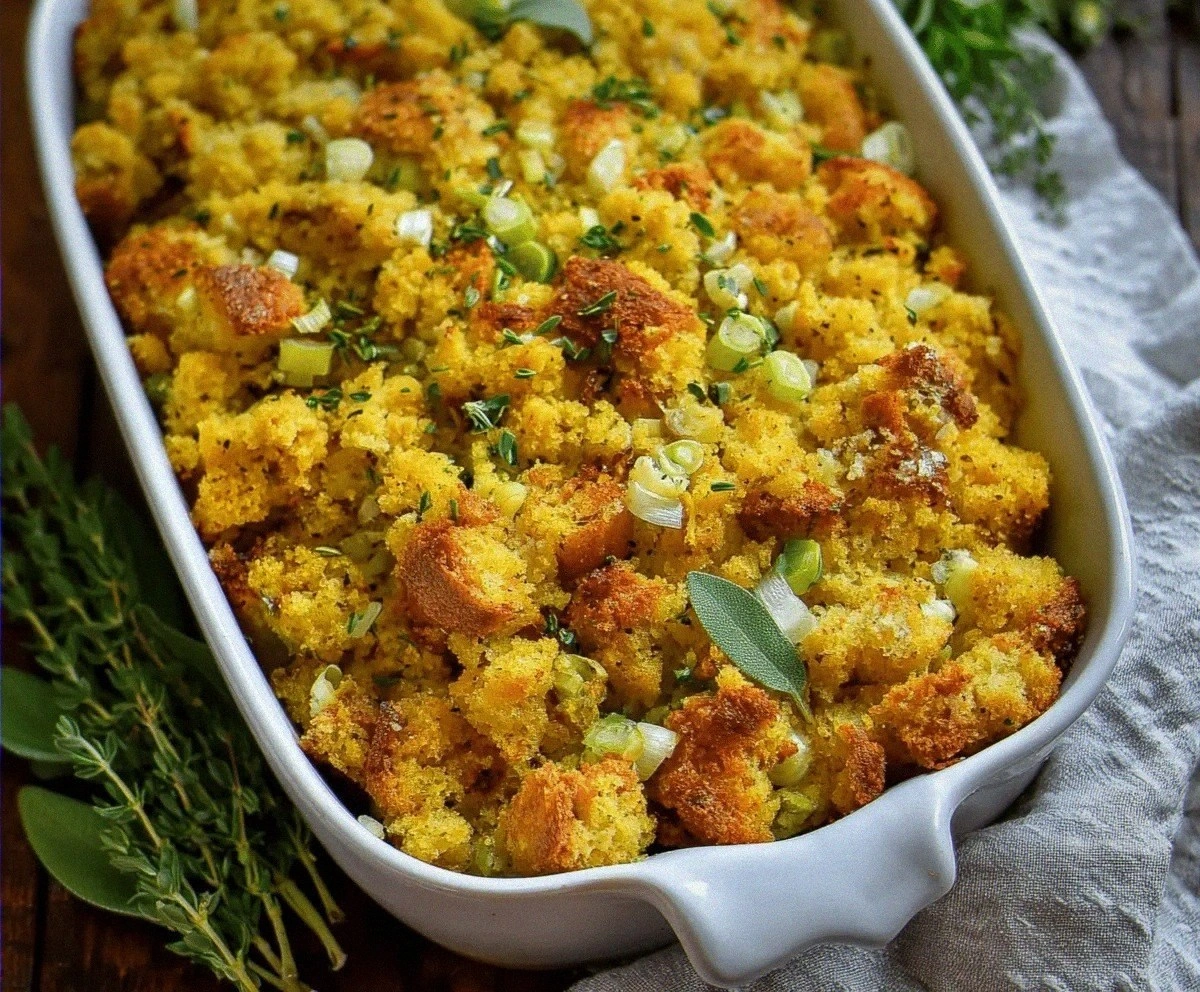
It was the first crisp morning of November, the kind where the kitchen smells like a promise of comfort and the world outside feels like a quiet, snow‑kissed lullaby. I remember pulling a pan of golden‑brown cornbread out of the oven, letting the steam curl around my face like a warm hug, and then hearing the faint pop of butter melting in a skillet. The moment I tossed the crumbled cornbread into a bubbling mixture of onions, celery, and fragrant herbs, the whole house seemed to inhale the aroma, as if the walls themselves were tasting the anticipation. That day, my family gathered around the table, and the first bite of the stuffing sparked a chorus of delighted sighs that still echo in my memory whenever I think of holiday gatherings.
What makes this cornbread stuffing stand out from every other side dish you’ve tried is the balance between sweet, savory, and a hint of buttery crunch that lingers just long enough to make you reach for seconds. The secret isn’t a fancy ingredient; it’s the technique of toasting the cornbread cubes just enough to create a sturdy yet tender base, then letting the broth soak in slowly, so each bite bursts with flavor without turning mushy. Imagine a texture that’s crisp on the top, soft in the middle, and a whisper of herb‑infused richness on the bottom – that’s the magic we’re chasing. And the best part? This recipe is forgiving enough for beginners yet sophisticated enough to impress seasoned cooks, making it the perfect centerpiece for any dinner table.
But wait – there’s a little twist I haven’t revealed yet, a tiny ingredient that most people skip and that turns the stuffing from “good” to “mind‑blowingly unforgettable.” I’ll let you in on that secret later, after we walk through the steps, because I love building a little suspense in the kitchen. Trust me, once you hear the story behind that ingredient, you’ll never look at a simple cornbread stuffing the same way again. Ready to dive in? Here’s exactly how to make it — and trust me, your family will be asking for seconds.
🌟 Why This Recipe Works
- Flavor Depth: The combination of toasted cornbread and aromatic herbs creates layers of taste that develop as the stuffing bakes, ensuring each forkful is a journey from savory to slightly sweet.
- Texture Harmony: By toasting the cornbread cubes first, you get a crisp edge that contrasts beautifully with the moist interior, preventing the dreaded soggy stuffing.
- Ease of Preparation: Most of the work is hands‑off – once the aromatics are sautéed, you simply fold everything together and let the oven do the rest.
- Time‑Smart: With a total cook time under an hour, you can have this dish ready for any holiday or weekday dinner without feeling rushed.
- Versatility: The base recipe is a canvas; you can add sausage, nuts, fruit, or even a splash of bourbon for a personalized twist.
- Nutrition Balance: Using lean chicken broth and a moderate amount of butter keeps the dish satisfying yet not overly heavy, fitting well into a balanced meal.
- Ingredient Quality: Fresh herbs and homemade or high‑quality store‑bought cornbread elevate the dish, proving that simple ingredients can shine when treated with respect.
- Crowd‑Pleaser Factor: The familiar comfort of cornbread combined with a sophisticated flavor profile makes it a hit for both kids and adults alike.
🥗 Ingredients Breakdown
The Foundation – Cornbread & Butter
Cornbread provides the sturdy backbone of this stuffing, offering a subtle corn sweetness that pairs perfectly with savory herbs. I always use a slightly sweet, crumbly cornbread—think a skillet‑baked version with a golden crust—because it holds up better when soaked in broth. If you’re short on time, a store‑bought cornbread works, but look for one that isn’t overly dense; a light, airy crumb will absorb the flavors without turning gummy. Butter, on the other hand, adds richness and helps create that coveted caramelized edge during baking. For a dairy‑free twist, you can swap butter for a high‑smoke‑point oil like clarified ghee, but the flavor profile will shift slightly toward a nutty note.
Aromatics & Spices – Onion, Celery, Garlic & Herbs
The classic trio of onion, celery, and garlic forms the aromatic base that awakens the senses the moment the pan hits the heat. Dice the onion and celery uniformly so they soften evenly, releasing a sweet, earthy perfume that fills the kitchen. I love adding a pinch of garlic because it adds a subtle bite that balances the sweetness of the cornbread. The herbs—sage, thyme, and rosemary—are the true stars; sage brings an earthy, almost piney note, while thyme adds a gentle floral undertone, and rosemary contributes a resinous depth that lingers on the palate. Fresh herbs are ideal, but dried versions work just as well if you adjust the quantities (about half the amount of fresh).
The Secret Weapons – Eggs & Broth
Eggs act as a gentle binder, ensuring the stuffing holds together without becoming a dense loaf. Lightly beaten, they coat each cornbread cube, creating a silky texture that’s both comforting and elegant. The broth, preferably low‑sodium chicken broth, is the moisture carrier; it infuses the stuffing with savory depth while keeping the crumb light. If you want a richer flavor, substitute half of the broth with homemade turkey stock or even a splash of white wine for a subtle acidity. Remember, the key is to add the broth gradually, allowing the cubes to soak up just enough without drowning them.
Finishing Touches – Fresh Parsley, Sausage, & Nuts
Fresh parsley adds a burst of bright green color and a fresh, slightly peppery finish that cuts through the richness. Crumbled breakfast sausage (or pork sausage) brings a smoky, meaty dimension that makes the stuffing heartier—perfect for holiday feasts. Toasted pecans or walnuts add a crunchy contrast and a nutty aroma that elevates the dish from simple to spectacular. If you’re aiming for a vegetarian version, skip the sausage and add a cup of sautéed mushrooms for an earthy umami boost. Each of these additions can be customized to suit dietary preferences while maintaining the core integrity of the dish.
With your ingredients prepped and ready, let's get cooking. Here’s where the fun really begins…

🍳 Step-by-Step Instructions
Preheat your oven to 350°F (175°C). While the oven warms, spread the cornbread cubes on a large baking sheet and toast them for about 12‑15 minutes, turning once halfway through, until they’re lightly golden and emit a nutty aroma. This toasting step is crucial because it creates a sturdy scaffold that will absorb the broth without turning soggy. Once toasted, set the cubes aside in a large mixing bowl, letting them cool slightly while you work on the aromatics.
In a heavy skillet, melt ½ cup (one stick) of unsalted butter over medium heat. Add the diced onion and celery, sautéing for 5‑7 minutes until they become translucent and start to caramelize, releasing a sweet, earthy fragrance that fills the kitchen. Add the minced garlic and cook for an additional 30 seconds, just until it becomes fragrant but not browned. This is the moment where patience truly pays off — I once let the garlic burn and the whole dish tasted bitter!
💡 Pro Tip: Sprinkle a pinch of salt on the onions and celery as they sauté; the salt draws out moisture, intensifying the caramelization.Stir in the dried sage, thyme, and rosemary, allowing the herbs to toast briefly in the butter for about 1 minute. This releases their essential oils, creating a fragrant base that will permeate the entire stuffing. If you’re using fresh herbs, add them a minute later to preserve their bright flavor. Then, pour in the chicken broth slowly, whisking continuously so the mixture becomes a smooth, velvety sauce. The broth should bubble gently, signaling that it’s hot enough to coat the cornbread evenly.
Transfer the toasted cornbread cubes back into the bowl with the herb‑broth mixture. Drizzle the beaten eggs over the top and gently fold everything together with a spatula, ensuring each cube is lightly coated but not overly saturated. At this stage, add the crumbled sausage (if using), toasted pecans, and fresh parsley. The mixture should look moist yet crumbly, with a slight sheen from the broth and eggs. If it looks too dry, add a splash more broth; if too wet, sprinkle a few extra cornbread cubes.
⚠️ Common Mistake: Over‑mixing can crush the cornbread cubes, resulting in a mushy stuffing. Fold gently to keep the texture airy.Lightly grease a 9‑x‑13‑inch baking dish with butter or cooking spray. Transfer the stuffing mixture into the dish, spreading it evenly. Sprinkle a thin layer of additional butter on top to encourage a golden crust. This top‑layer butter is the secret to that irresistible crackly finish that makes the first bite so satisfying.
Cover the dish with aluminum foil and bake for 20 minutes. After 20 minutes, remove the foil and continue baking for another 10‑15 minutes, or until the top turns a deep golden brown and you hear a gentle sizzle around the edges. The scent at this point should be intoxicating—a blend of buttery corn, aromatic herbs, and savory broth that makes your mouth water instantly.
Remove the stuffing from the oven and let it rest for 5‑10 minutes. Resting allows the flavors to meld and the interior to set, making it easier to slice and serve. While it rests, the crust will firm up just enough to give that satisfying crunch with each forkful.
Serve the cornbread stuffing hot, garnished with a sprinkle of fresh parsley for a pop of color. Pair it with roasted turkey, glazed ham, or a simple green salad for a balanced meal. Go ahead, take a taste — you’ll know exactly when it’s right, as the flavors will dance on your palate, marrying sweet corn notes with herbaceous depth.
And there you have it! But before you dig in, let me share some tips that will take this from great to absolutely unforgettable…
🔐 Expert Tips for Perfect Results
The Taste Test Trick
Before you bake, scoop a small spoonful of the mixture onto a plate and give it a quick taste. Adjust the seasoning now, because once it’s in the oven, the flavors concentrate and any missing salt or herb will be amplified. I always add a pinch more sage at this stage if the flavor feels a little shy. Trust me on this one: a quick taste before baking saves you from a bland final product.
Why Resting Time Matters More Than You Think
Allowing the stuffing to rest after baking isn’t just about making it easier to serve; it lets the moisture redistribute, turning the interior from soggy to perfectly moist. The result? Each bite holds together without falling apart, and the flavors become more cohesive. I once cut into the stuffing straight out of the oven and found it a bit crumbly; a 10‑minute rest solved the problem instantly.
The Seasoning Secret Pros Won’t Tell You
Professional chefs often finish dishes with a splash of acid—like a dash of lemon juice or a splash of white wine vinegar—to brighten the flavor profile. Adding just a teaspoon of fresh lemon zest at the end can lift the heavy, buttery notes and make the stuffing feel lighter on the palate. This tiny tweak is a game‑changer that most home cooks overlook.
Crisp‑Top Mastery
If you crave an extra‑crunchy top, switch the oven to broil for the last 2‑3 minutes of cooking. Keep a close eye on it, because the sugar in the cornbread can go from caramelized to burnt in seconds. The result is a beautifully caramelized crust that adds a delightful textural contrast.
Balancing Moisture Without Over‑Soaking
The key to perfect moisture is adding the broth gradually while gently folding. If you pour it all at once, the cornbread can become overly saturated, leading to a soggy texture. Instead, drizzle in a quarter cup at a time, letting each addition soak before adding more. This method ensures a fluffy yet moist interior.
🌈 Delicious Variations to Try
One of my favorite things about this recipe is how versatile it is. Here are some twists I've tried and loved:
Apple‑Cranberry Harvest
Fold in ½ cup diced apples and ¼ cup dried cranberries for a sweet‑tart contrast that brightens the savory base. The fruit adds a subtle acidity that balances the richness of the butter and broth, making it perfect for autumn gatherings.
Spicy Jalapeño Kick
Add 1‑2 finely chopped jalapeños (seeds removed for less heat) and a pinch of cayenne pepper to the aromatics. This variation brings a gentle heat that awakens the palate without overwhelming the comforting corn flavor.
Southern BBQ Sausage
Swap the plain breakfast sausage for smoked BBQ sausage, and add a tablespoon of barbecue sauce to the broth. The smoky, tangy notes create a bold, hearty stuffing that pairs wonderfully with grilled meats.
Mushroom & Walnut Umami
Sauté a cup of mixed mushrooms with thyme and fold in toasted walnuts for a deep, earthy version. This vegetarian-friendly twist offers a meaty texture and a nutty finish that satisfies even carnivores.
Cheesy Cheddar Surprise
Stir in ½ cup shredded sharp cheddar during the final fold. The cheese melts into the stuffing, creating pockets of gooey goodness that add a luxurious richness.
Herb‑Infused Butter Finish
Mix softened butter with minced rosemary, sage, and a touch of garlic, then dot the top of the stuffing before baking. As the butter melts, it infuses the crust with an aromatic herb burst, elevating the overall flavor.
📦 Storage & Reheating Tips
Refrigerator Storage
Allow the stuffing to cool completely, then transfer it to an airtight container. It will keep fresh in the fridge for up to 4 days. When you’re ready to serve again, reheat gently in a covered oven‑safe dish at 300°F for 20‑25 minutes, adding a splash of broth if it looks dry.
Freezing Instructions
Portion the stuffing into freezer‑safe bags or containers, flattening it for even freezing. It freezes well for up to 3 months. To reheat, thaw overnight in the refrigerator, then bake uncovered at 350°F for 15‑20 minutes, or until heated through and the top regains its crispness.
Reheating Methods
The trick to reheating without drying it out? A splash of chicken broth or a drizzle of melted butter before popping it in the oven. For a quick microwave fix, cover a single serving with a damp paper towel and heat on medium power for 1‑2 minutes, then finish under the broiler for 2 minutes to restore the crust.


